
Electrical Motor Hp Amps
Reference data and engineering information about electrical motor hp amps for electrical applications.
Overview
This page provides a direct lookup for the typical full-load current (in amperes) drawn by AC induction motors at standard voltages. The data is most useful for preliminary sizing of conductors, overcurrent protection devices, and electrical panels.
Original source context preserved: "Engineering ToolBox - Resources, Tools and Basic Information for Engineering and Design of Technical Applications!" The source table is titled "Electrical Motors - Horsepower, Voltage, Efficiency and Amps" and lists ampere ratings for 115 VAC and 230 VAC motors at 50% and 70% efficiency.
Key Formulas
The fundamental relationship between mechanical power output and electrical current input for a motor is:
This formula accounts for the real-world factors of motor efficiency and power factor, which determine how much current is required to produce a given horsepower output.
Variables
| Symbol | Description | Unit / Value |
|---|---|---|
| Motor full-load current | A | |
| Motor mechanical power output | hp | |
| Supply voltage (line-to-line) | V | |
| Motor efficiency (decimal) | % | |
| Motor power factor (decimal) | - | |
| 745.7 | Conversion factor | W/hp |
Reference Data
The table below shows typical full-load ampere ratings for common motor sizes. Values assume a standard squirrel-cage induction motor and are for continuous duty. Actual current can vary by manufacturer and specific motor design.
Motor Rating(hp) | 115 VAC, 50% η(A) | 115 VAC, 70% η(A) | 230 VAC, 50% η(A) | 230 VAC, 70% η(A) |
|---|---|---|---|---|
| 0.25 | 3.2 | 2.3 | 1.6 | 1.2 |
| 0.333 | 4.3 | 3.1 | 2.2 | 1.5 |
| 0.5 | 6.5 | 4.6 | 3.2 | 2.3 |
| 0.75 | 9.7 | 7 | 4.9 | 3.5 |
| 1 | 13 | 9.3 | 6.5 | 4.6 |
| 1.5 | 19.5 | 13.9 | 9.7 | 7 |
| 2 | 25.9 | 18.5 | 13 | 9.3 |
| 5 | 64.9 | 46.3 | 32.4 | 23.2 |
Source: engineeringtoolbox.com
Motor Current Calculator
Use the calculator below to estimate full-load current for a motor not listed in the table, or to verify calculations. This uses the formula above.
Motor Full-Load Current Estimator
Unit Converter
Motor Horsepower and Current Unit Converter
Restored Original Source Tables
The following tables are restored from the original source page to preserve the complete reference data.
Source row text | Migration handling |
|---|---|
| × | | × | 検索 | | Original placeholder/search row preserved; not motor ampere-rating data. |
| | × | | Original placeholder/search row preserved; not motor ampere-rating data. |
| navigation, advertisement, and site search rows | Non-engineering site layout rows consolidated here; ampere-rating data is preserved in the restored source table. |
Source: engineeringtoolbox.com
Electrical Motors - Horsepower, Voltage, Efficiency and Amps
Ampere Rating (amps) | Ampere Rating (amps) | Ampere Rating (amps) | Ampere Rating (amps) | Ampere Rating (amps) |
|---|---|---|---|---|
| Power Rating (hp) | 115 VAC | 115 VAC | 230 VAC | 230 VAC |
| Efficiency (%) | Efficiency (%) | Efficiency (%) | Efficiency (%) | |
| 50 | 70 | 50 | 70 | |
| 1/4 | 3.2 | 2.3 | 1.6 | 1.2 |
| 1/3 | 4.3 | 3.1 | 2.2 | 1.5 |
| 1/2 | 6.5 | 4.6 | 3.2 | 2.3 |
| 3/4 | 9.7 | 7 | 4.9 | 3.5 |
| 1 | 13 | 9.3 | 6.5 | 4.6 |
| 1 1/2 | 19.5 | 13.9 | 9.7 | 7 |
| 2 | 25.9 | 18.5 | 13 | 9.3 |
| 5 | 64.9 | 46.3 | 32.4 | 23.2 |
Source: engineeringtoolbox.com
Interactive Motor Current Chart
The original motor-current image and source table are represented below as plottable full-load current curves by horsepower, voltage, and efficiency.
Electrical Motor Full-Load Current by Horsepower
Original Source Images
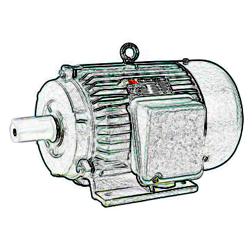
The following original source images are preserved to avoid losing visual reference material. When an image contains chart or tabular data, its extracted values are represented in the page tables, calculators, or interactive charts; remaining images are retained as visual source references.
Engineering Notes
- Power Factor Significance: An electric motor is an inductive load. A low power factor means the motor draws significant current to produce useful work, increasing apparent power (kVA) demand on the supply.
- Starting Current: The table lists full-load (running) current. Motor starting (inrush) current can be 6 to 8 times higher, which is critical for selecting protective devices like circuit breakers and fuses.
- Voltage Effects: Current draw is inversely proportional to voltage. A lower-than-rated voltage will cause higher current draw for the same horsepower, potentially leading to overheating.
- Motor Nameplate: Always consult the manufacturer's nameplate on the motor for its specific rated current, efficiency, and power factor. The table provides typical values for planning purposes only.
- Three-Phase Motors: This table is for single-phase motors. The formula for three-phase motors is .