
Natural Gas Pipe Sizing
Reference data and engineering information about natural gas pipe sizing for gases and compressed air applications.
Overview
This page provides low-pressure natural gas pipe sizing data for steel and copper piping. The capacity tables let you select pipe diameter based on required heat load (kW) and equivalent run length, accounting for typical fittings losses.
Design Conditions
All capacity values assume the following parameters:
- Maximum pressure: Less than 10 kPa (low-pressure systems)
- Allowable pressure drop: 125 Pa across the pipe run
- Fittings factor: 1.5 (adds 50 % to measured straight length)
- Gas calorific value: 37 MJ/m³
Equivalent Pipe Length
To account for pressure losses from elbows, tees, and valves, calculate the equivalent pipe length before entering the tables:
This 50 % addition represents a typical fittings load for residential and light-commercial installations. For systems with unusually high fitting counts, consult local codes for a site-specific factor.
Steel Pipe — Schedule 40
Pipe Size(in) | 3 m(kW) | 6 m(kW) | 12 m(kW) | 24 m(kW) | 50 m(kW) |
|---|---|---|---|---|---|
| 1/2 | 41 | 28 | 19 | 13 | 9 |
| 3/4 | 86 | 59 | 40 | 28 | 19 |
| 1 | 161 | 110 | 76 | 52 | 35 |
| 1 1/4 | 331 | 228 | 155 | 108 | 72 |
| 1 1/2 | 495 | 340 | 235 | 161 | 108 |
| 2 | 956 | 655 | 450 | 310 | 210 |
| 3 | 2690 | 1850 | 1270 | 875 | 590 |
| 4 | 5490 | 3775 | 2595 | 1780 | 1200 |
| 6 | 16090 | 11055 | 7600 | 5220 | 3510 |
| 8 | 33050 | 22715 | 15615 | 10730 | 7210 |
Source: engineeringtoolbox.com
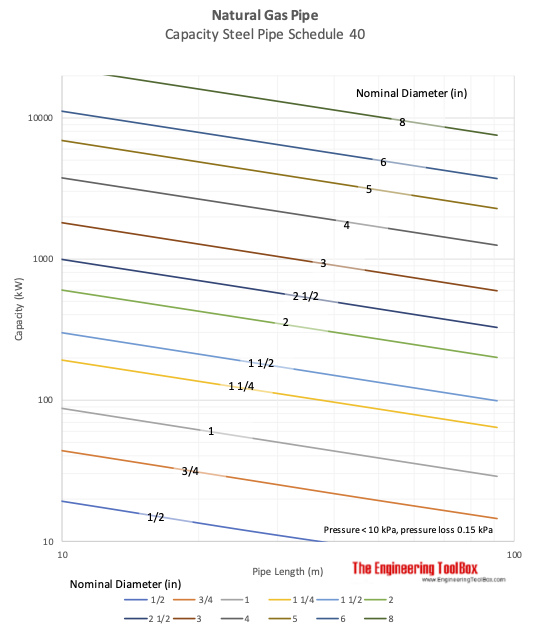
Natural Gas Pipe Capacity Diagram
The tables and diagrams below can be used to size natural gas pipes. Download Natural Gas Pipe Sizing Chart as pdf-file. The source page also references Natural Gas - Pipe Sizing - Imperial Values for inch-pound sizing workflows.
- Download Natural Gas Pipe Sizing Chart as pdf-file.
Natural Gas Pipe Capacity vs Equivalent Pipe Length
Imperial Values and Unit Converter
The original source references Natural Gas - Pipe Sizing - Imperial Values. This converter preserves the inch-pound workflow by converting heat load, gas volume flow, pipe length, pressure drop, and gas heating value.
Natural Gas Pipe Sizing Unit Converter
Copper Tubing — Type K
Type K has the thickest walls of the copper tubing grades and is specified for underground and higher-pressure service.
Nominal Size (OD)(in) | 3 m(kW) | 6 m(kW) | 12 m(kW) | 24 m(kW) |
|---|---|---|---|---|
| 1/4 (3/8 OD) | 6 | 4 | 3 | 2 |
| 3/8 (1/2 OD) | 13 | 9 | 6 | 4 |
| 1/2 (5/8 OD) | 26 | 18 | 12 | 8 |
| 5/8 (3/4 OD) | 46 | 31 | 21 | 15 |
| 3/4 (7/8 OD) | 65 | 45 | 31 | 21 |
| 1 (1 1/8 OD) | 140 | 96 | 66 | 45 |
| 1 1/4 (1 3/8 OD) | 250 | 170 | 119 | 82 |
Source: engineeringtoolbox.com
Copper Tubing — Type L
Type L has a medium wall thickness and is the most common grade for interior residential gas piping where copper is permitted by local code.
Nominal Size (OD)(in) | 3 m(kW) | 6 m(kW) | 12 m(kW) | 24 m(kW) |
|---|---|---|---|---|
| 1/4 (3/8 OD) | 7 | 5 | 3 | 2 |
| 3/8 (1/2 OD) | 15 | 10 | 7 | 5 |
| 1/2 (5/8 OD) | 29 | 20 | 13 | 9 |
| 5/8 (3/4 OD) | 49 | 33 | 23 | 16 |
| 3/4 (7/8 OD) | 75 | 51 | 35 | 24 |
| 1 (1 1/8 OD) | 150 | 104 | 71 | 49 |
| 1 1/4 (1 3/8 OD) | 260 | 180 | 124 | 85 |
Source: engineeringtoolbox.com
Restored Original Source Tables
The following tables are restored from the original source page to preserve the complete reference data.
Natural Gas - Sizing of Low Pressure Steel Pipes - Schedule 40
Pipe Length (m) | Pipe Length (m) | Pipe Length (m) | Pipe Length (m) | Pipe Length (m) | Capacity of Pipe (kW) |
|---|---|---|---|---|---|
| 3 | 6 | 12 | 24 | 50 | |
| 1/2 | 41 | 28 | 19 | 13 | 9 |
| 3/4 | 86 | 59 | 40 | 28 | 19 |
| 1 | 161 | 110 | 76 | 52 | 35 |
| 1 1/4 | 331 | 228 | 155 | 108 | 72 |
| 1 1/2 | 495 | 340 | 235 | 161 | 108 |
| 2 | 956 | 655 | 450 | 310 | 210 |
| 2 1/2 | 1520 | 1045 | 720 | 495 | 330 |
| 3 | 2690 | 1850 | 1270 | 875 | 590 |
| 4 | 5490 | 3775 | 2595 | 1780 | 1200 |
| 5 | 9935 | 6830 | 4695 | 3225 | 2170 |
| 6 | 16090 | 11055 | 7600 | 5220 | 3510 |
| 8 | 33050 | 22715 | 15615 | 10730 | 7210 |
Source: engineeringtoolbox.com
Natural Gas - Sizing of Low Pressure Copper Tubing - type K
Pipe Length (m) | Pipe Length (m) | Pipe Length (m) | Pipe Length (m) | Capacity of Pipe (kW) |
|---|---|---|---|---|
| 3 | 6 | 12 | 24 | |
| 1/4 (3/8) | 6 | 4 | 3 | 2 |
| 3/8 (1/2) | 13 | 9 | 6 | 4 |
| 1/2 (5/8) | 26 | 18 | 12 | 8 |
| 5/8 (3/4) | 46 | 31 | 21 | 15 |
| 3/4 (7/8) | 65 | 45 | 31 | 21 |
| 1 (1 1/8) | 140 | 96 | 66 | 45 |
| 1 1/4 (1 3/8) | 250 | 170 | 119 | 82 |
Source: engineeringtoolbox.com
Natural Gas - Sizing of Low Pressure Copper Tubing - type L
Pipe Length (m) | Pipe Length (m) | Pipe Length (m) | Pipe Length (m) | Capacity of Pipe (kW) |
|---|---|---|---|---|
| 3 | 6 | 12 | 24 | |
| 1/4 (3/8) | 7 | 5 | 3 | 2 |
| 3/8 (1/2) | 15 | 10 | 7 | 5 |
| 1/2 (5/8) | 29 | 20 | 13 | 9 |
| 5/8 (3/4) | 49 | 33 | 23 | 16 |
| 3/4 (7/8) | 75 | 51 | 35 | 24 |
| 1 (1 1/8) | 150 | 104 | 71 | 49 |
| 1 1/4 (1 3/8) | 260 | 180 | 124 | 85 |
Source: engineeringtoolbox.com
Original Source Images
The following original source images are preserved to avoid losing visual reference material. When an image contains chart or tabular data, its extracted values are represented in the page tables, calculators, or interactive charts; remaining images are retained as visual source references.
Engineering Notes
Natural Gas Load and Equivalent Length
Material selection — Steel Schedule 40 is standard for main lines, commercial runs, and underground service where strength and larger diameters are required. Copper Type K is preferred underground or where higher pressure ratings are needed. Copper Type L is the default for interior residential branch lines, subject to local code approval.
Wall thickness effect — Type L copper delivers slightly higher capacity than Type K for the same nominal size because its thinner wall yields a larger internal bore. Verify actual ID when close to a sizing boundary.
Fittings factor — The 1.5 factor (50 % length addition) covers a moderate number of standard elbows and tees. Systems with many close-spaced fittings, long manifold runs, or restrictive devices (regulators, meters) should use a higher factor or perform a detailed equivalent-length calculation for each fitting.
Sizing method — These tables use a fixed 125 Pa pressure drop. If your allowable pressure drop differs, the capacity values scale roughly with the square root of the pressure-drop ratio. Always confirm with the applicable gas code (e.g., IFGC, EN 1775, AS/NZS 5601).
Pipe degradation — Steel pipes can corrode internally over time, reducing effective capacity. Copper is more resistant but can suffer dezincification in aggressive water soils. Periodic inspection and conservative sizing margins are recommended.